What is a “Gateway City” at Parallel?
A Gateway City a city with an international airport that offers easy flight paths to/from the U.S. We choose our hiking destinations near these cities to reduce the hassle of travel and provide easy access to our trip-start locations. This ensures you can travel to and from Europe neatly within the confines of a 7-day week, and, better yet, have a real adventure while minimizing your transit time.
Ok, I am headed to Spain’s Costa Brava with Parallel and have booked my flight to Barcelona – now what?
Flights to Barcelona are booked and you built in an extra couple of days around your Parallel trip. How best to use your limited time in this iconic Mediterranean city? The possibilities are close to limitless, but here are some of our top recommendations. And in true Parallel form, we’re here to help you veer off the beaten path.
First things first, how do I get from the airport to the city center?
Barcelona’s El Prat airport is easily connected to Barcelona’s city center. You have a few choices for how to get there including bus, train, and taxis/ubers.
- Aerobús: The Aerobús is the fastest and most convenient shuttle bus between Barcelona Airport (El Prat, terminals T1 and T2) and the city center. It runs every 5–10 minutes, 24 hours a day, all year round. It takes about 35 minutes to reach Plaça de Catalunya, the main stop in the city center and costs about €6.75 per ticket. Many American travelers are often leery of taking the bus – but trust us, this is the way to go! It’s clean, super efficient, and runs all the time. And it’s cheap!
- Train (R2 Nord): This is the only RENFE suburban line that connects Barcelona Airport (Terminal 2) directly to the city, with stops at major hubs like Barcelona-Sants and Passeig de Gràcia. It runs every 30 minutes, takes about 20–25 minutes to reach the center, and costs around €4.60 for a single ticket. To access the train, you’ll have to take the shuttle from T1 (where most international flights will arrive) over to T2 and then hoof it over a remarkably long covered walkway (about one kilometer). Accessing the train from T1 will add about 20-30 minutes to your transit time.
- Taxi/Uber/Bolt: If public transport isn’t your cup of tea after a red-eye, there are always taxis and Ubers. These take about 25–30 min depending on traffic and cost around €30. If taking a taxi, ask for a set price before they start running the meter! We prefer Uber for this reason as the price is fixed and there are no surprises.
Where to stay in Barcelona?
There are many neighborhoods to lay your head and literally thousands of hotels to choose from. Here are a few of our favorite neighborhoods (a note – hotels in Barcelona can be pricey – consider Airbnb as a good option, too):
- El Born: It’s artsy, historic, full of tapas bars and boutiques. Also great for walking everywhere!
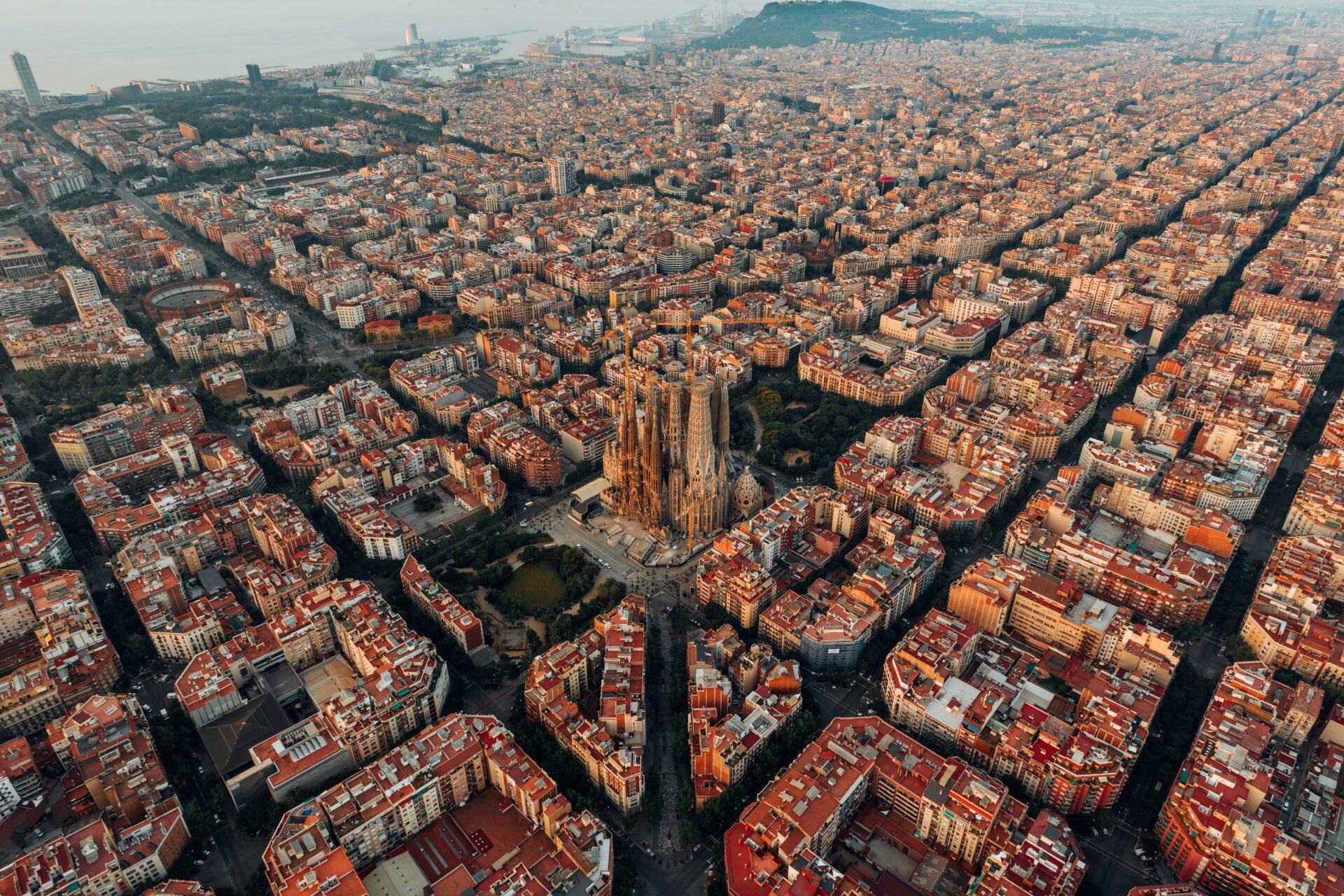
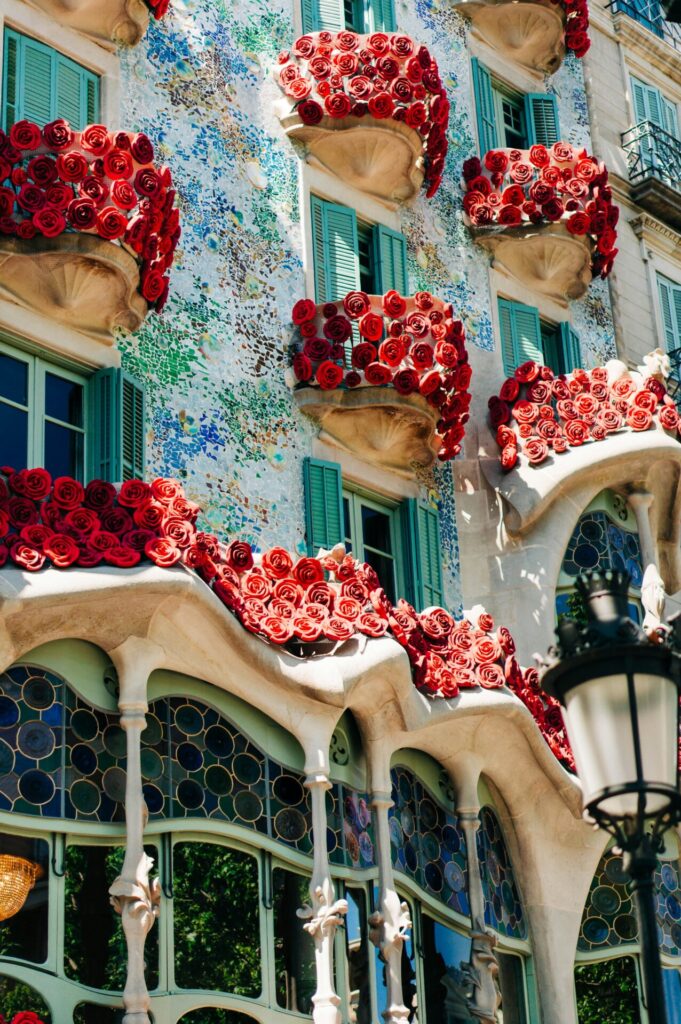
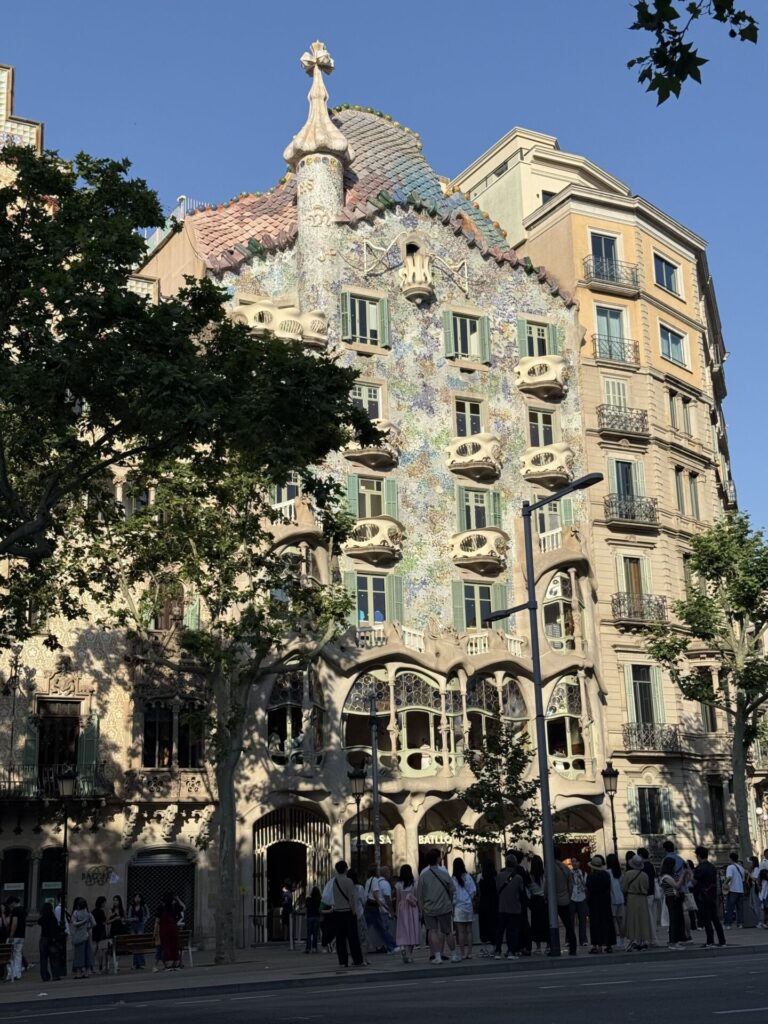
- Eixample: This area has wide boulevards, modernist architecture (por ejemplo, Gaudí’s Casa Batlló and La Pedrera), and is central and elegant. (see below!)
- Gràcia: This neighborhood has a village vibe within the city with lively plazas, indie shops, and a more local feel.
- Barceloneta: Right by the beach, more casual, and perfect for if you want a sea + city-life combo.
How to Get Around and Explore?
You’ve got options!
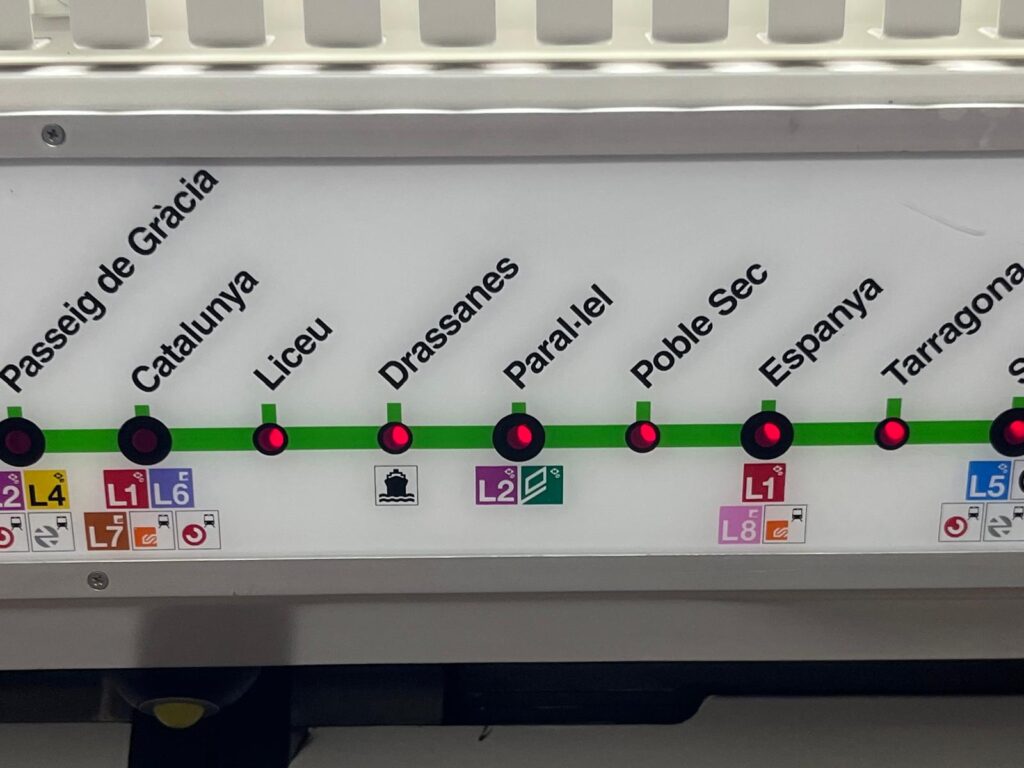
- Metro: Fast, reliable, and covers most neighborhoods. If you’re on it, look for the “Parallel” stop!
- Bus/Tram: Good for short hops, especially to the beach.
- Taxi/Uber/Bolt: Easy to hail, but pricier than metro.
- Walking: Central Barcelona is very walkable – many sights are close together.
- Bike: Popular, especially along the waterfront and in Eixample.
What to Do / See?
Some of these you will find on every Barcelona guide, many of these are our own office favorites!
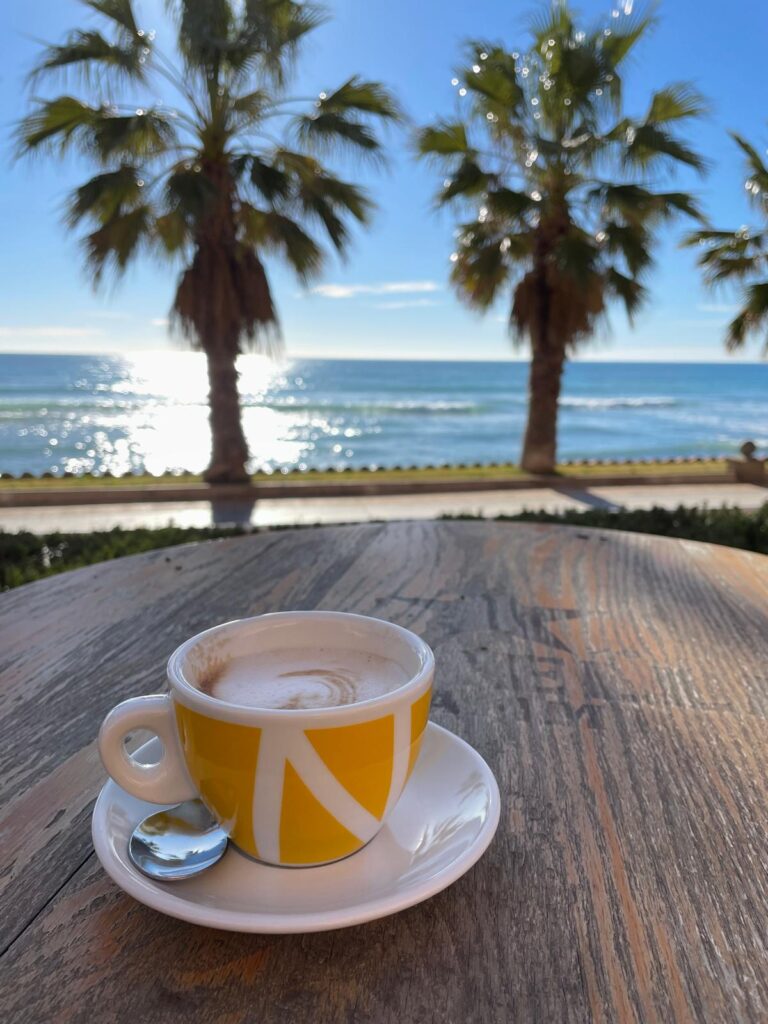
- Barceloneta Beach: Stroll the promenade, swim, or enjoy seafood by the sea. Amazing people watching. (Cafe con leche with palm trees? Sí, por favor!)
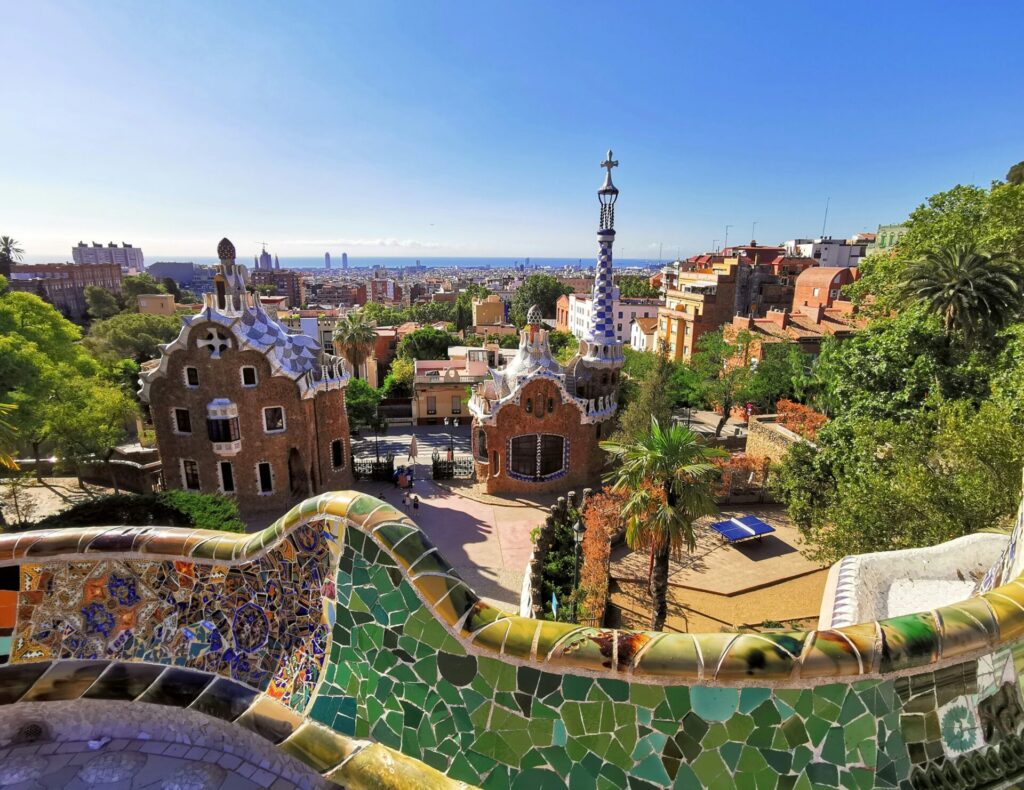
- Gaudí Highlights: Of course, the most famous site in Barcelona is probably the stunning Sagrada Família. Parallel team member Annika cried the first time she entered in 2015 (and she wasn’t even raised going to church). Be sure to book your tickets for a time entry in advance here. Same goes for Parque Güell and Casa Batlló. Not to be missed! Pro-tip: Parque Güell is absolutely worth the price of admission – go in the morning to avoid crowds. Unless you are an architecture junkie, you can do a (free) walk-by of SagradaFamilia and Casa Batlló without worrying about tickets and long lines.
- Passeig de Gràcia: When you are over there admiring the sinuous curves of the Casa Batlló, save some time for window-shopping the world-class shops along the Passeig de Gràcia. You’ll find brands from around the world mixed in with more local establishments.
- Gothic Quarter: Medieval streets, hidden plazas, and the famous Barcelona Cathedral.
- Montjuïc Hill: Cable car ride, a castle, gardens, and city views. Lovely for sunset!
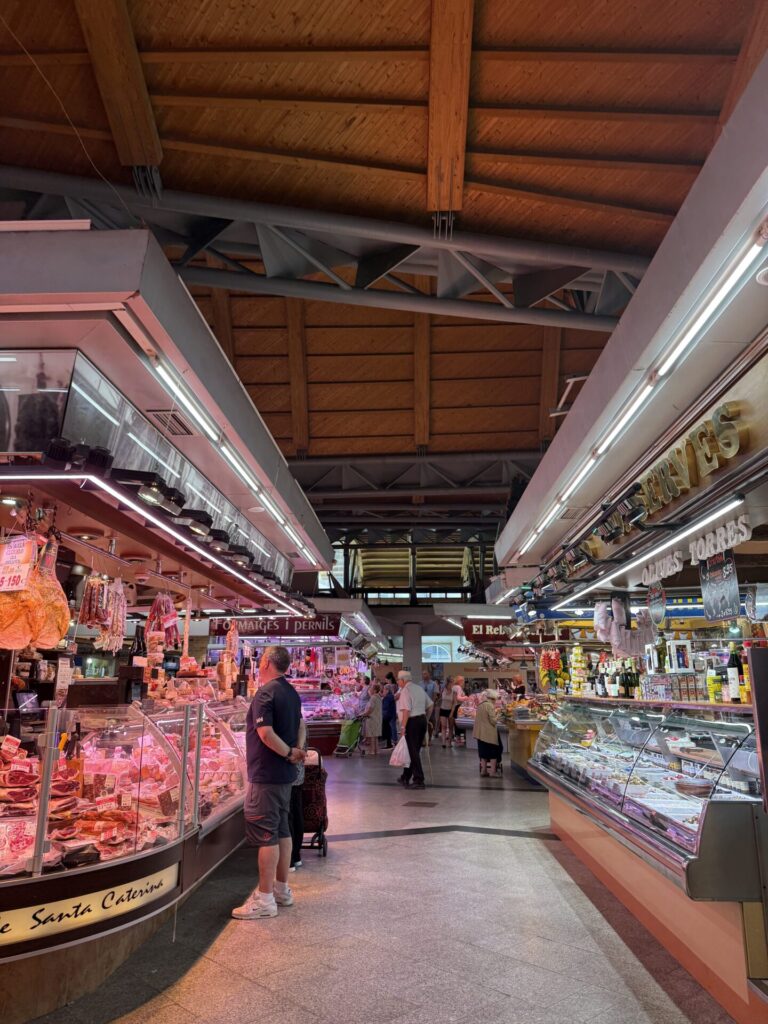
- Markets: Always a great place to have something to eat and people watch! Two options: La Boqueria (foodie heaven off of La Rambla) and Mercat de Sant Antoni (offering more of a local vibe).
- Walking Tour: Several companies offer “pay what you can” walking tours. They are free to book and a great way to see some sights and gain some local insights by foot. Guruwalk is one great option to explore.
What to Eat? One of our favorite questions, we’re happy you asked!
Tapas or “little bites” are a great way to try many flavors and dishes. We recommend patatas bravas, croquetas, and pan con tomate. YUM. They will be available in almost every bar and restaurant throughout the city. Our rule of thumb – pick restaurants off of the main drag, and the more locals you see, the better it’s likely to be.
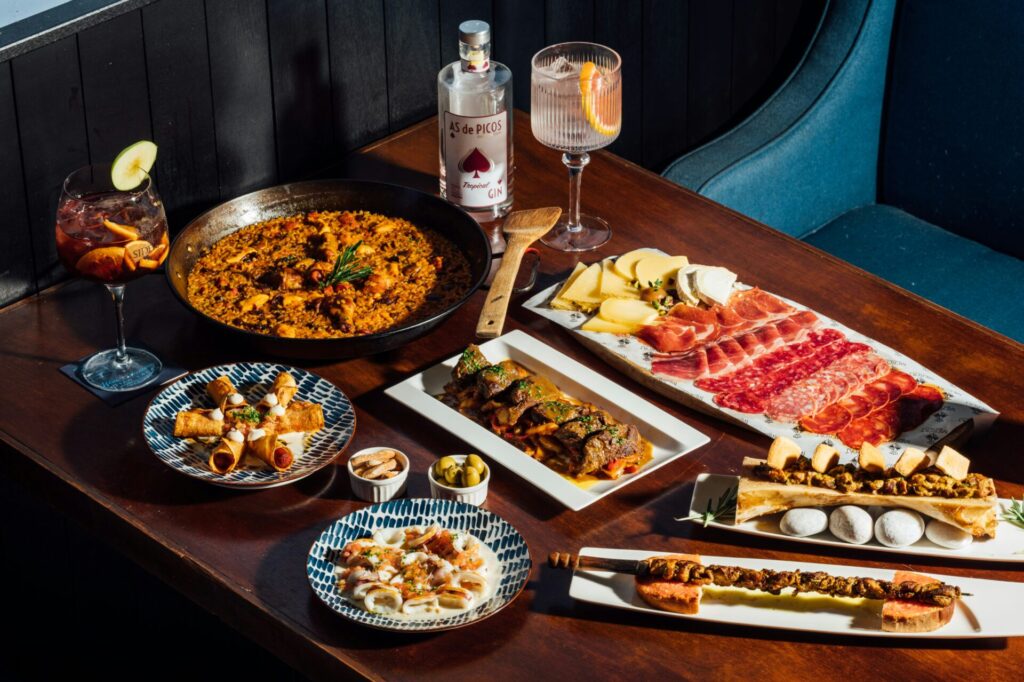
If your appetite is larger than some appetizers and you want to take advantage of life by the sea, be sure to try paella and grilled sardines in Barceloneta.
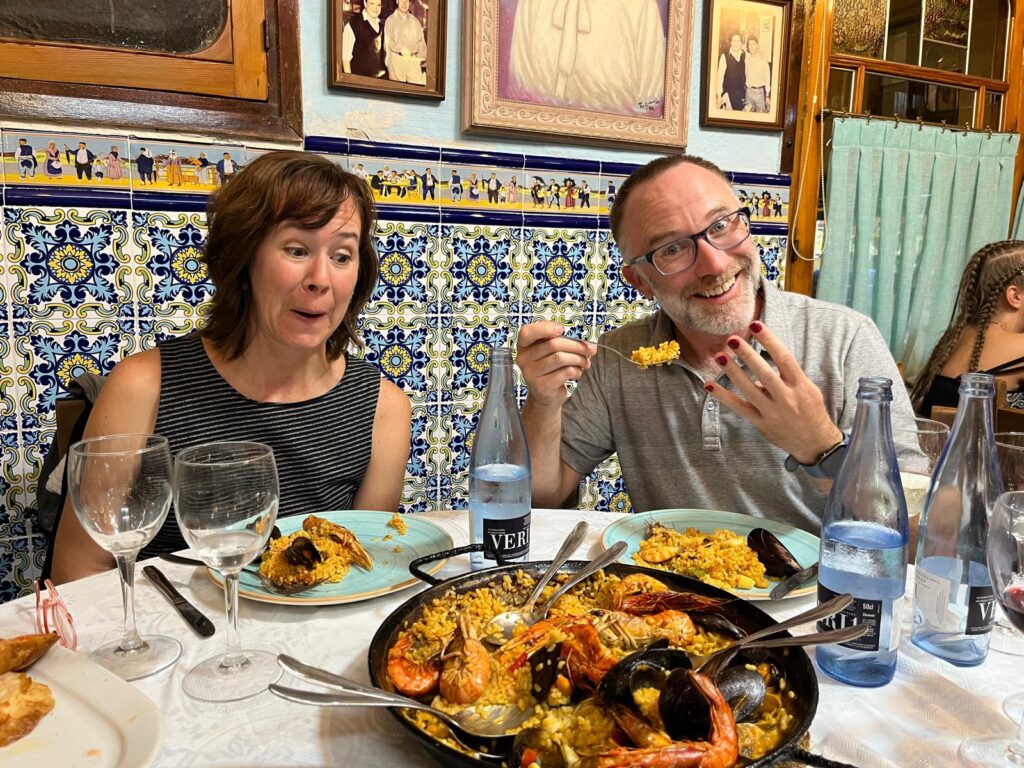
Barcelona is capital of the Catalan region, and regional specialities include: escudella (hearty stew), botifarra sausage, and crema catalana (which will look and taste a lot like one of the better flans you’ve ever had).
For those with a sweet tooth, you will need to try churros with chocolate and ensaïmada pastries.
Finally, to wash it all down, we recommend a glass of vermut, cava (sparkling wine), one of many outstanding regional wines (like a divine garnacha) made just a train stop or two away, or the ubiquitous and delicious sangria – served in both red and white varieties.
Other Miscellaneous Tips + Tricks
As it goes with many large, international cities – it’s important to remain aware of your belongings. Barcelona is, in general, a very safe major city, but pick-pockets do work the touristy areas. Keep your phone / wallet / valuables close to your body and try to avoid taking your phone out on the street.
Any guide to Barcelona will mention “La Rambla,” the iconic promenade flanked by shops and restaurants beneath a gorgeous arc of trees. And if it is your first time in Barcelona, you should probably see La Rambla, but be ready for it to be thronged – and we mean thronged – with tourists if you go there anytime between noon and 10 PM. La Rambla is best enjoyed early in the morning when it’s almost empty – walk downhill from Plaza Catalunya towards the marina – and then enjoy a café con leche with a sea breeze.
And the list goes on…. We hope you feel inspired to explore this Mediterranean city filled with great architecture, delicious food, great atmosphere, and fabulous people watching!